Monday, February 15, 2010

Kim Chi


The newest edition to my fermenting repetoire.


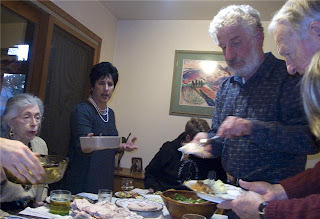
Fermenting food has been a rather intimidating project which I have put off for a while, but have recently integrated fairly smoothly into my life. I think I was afraid of the idea of rotting food on purpose to eat, like, maybe if I did it wrong it would become deadly poison. But the few things I've made so far...have been very easy and imprecise, mostly assembled to taste and with whatever kitchen sink ingredients happen to be around. Kim Chi worried me a little, because it's so exotic, or something.


Probably also because Jean explained that we must use salt preserved shrimp, because vegan Kim Chi isn't truly Kim Chi, it's just pickled cabbage, a westernized facsimile. Ah, salt fermented shrimp...the strangest thing in my refrigerator right now. When Kate saw the jar last night at Dinner Club, she said, delicately, "is that....pickled maggots?!". Nope, just some tiny, incredibly salty shrimp in a jar. Duh.

It took a while to assemble all the ingredients for the Kim Chi, because, well, where does one find salt preserved shrimp? Jean found it at a Korean grocery store in Tacoma. And now we have a whole jar!

1 napa cabbage
2 daikon radishes
lots of salt
3 carrots
bunch green onions
head garlic
inch or two ginger
salt preserved shrimp
korean crushed red pepper
fish sauce

Slice the cabbage in half and lay it in a big bowl filled with freezing cold water, let it sit for a moment and then dunk it in and out several times. This causes the leaves to bloom a bit. Set to dry out in the dish drainer or a colander. Chop the radish into cubes and put in a large bowl. Throw a handful of salt onto the radish, and mix it around with your hands. There should be enough salt so that each cube has some on every side. Lay the cabbage halves, one at a time, into another large bowl, sliced side down. Rub salt on each side of every leaf, all the way to the center.

Through the magic of osmosis, the water in the vegetables is drawn out by the salt. They get pretty droopy and after about two hours are totally wilted and veritably floating in a puddle of brine.


Rinse the radish cubes thoroughly in a colander, return to bowl. If the bowl has a lid, so much the better, but we just used a plastic bad. Rinse the cabbage out very carefully, running water between each leaf. Gently squeeze the water out, and rinse again. Repeat once more. Lay the cabbage halves into a flat-ish container (we used a casserole dish with a glass lid).

Slice the carrots, green onions, and a few cloves of garlic into thin strips.


In a food processor (or else, maybe a blender), add the ginger, as much garlic as you want (we used a whole head for the recipe), a few tablespoons of salt preserved shrimp, and some splashes of fish sauce, about a quarter cup, and chop to a paste. Pour into a large bowl, and add the chili powder, again, to taste, and stir. The consistency will very based on how much chili powder you use, ours was kind of like thick pancake batter, and was just spicy enough for me, but Jean would have preferred it a bit spicier.

Stir the carrots and green onions into this spicy batter, coating them totally. Now the fun part. Smudge a dollop of the pungent mixture between every leaf of the cabbage. Don't do it with your bare hands or your skin will be burning for hours; I suppose if you were extremely prepared you'd use plastic gloves, but we just used recycled bulk food bags. Stir the rest of the paste into the radishes until they are bright red. When each leaf of the cabbage and cube of radish is coated, cover the dishes with a lids/plastic bags and put it somewhere not too hot and not too cold. We put it in the closet on the top shelf. Leave it there for two or three days, tasting every day, until it "tastes right", then keep it in the fridge until devoured.


We made our Kim Chi at night, and in the morning it greeted us with a robust, "Hell-llo! Kim CHII-III!!" smell. If I lived in a cartoon, there would have been bright orange clouds meandering down all the hallways. At first it was a bit appalling, but we all became accustomed to the smell and greeted it back. After the second day, the smell was associated to my body with the way it tastes, and I just wanted to eat it all the time. It didn't last long, we ate it all in about a week.

Jean said he thought it might be the best Kim Chi he's eaten.

Tuesday, December 1, 2009

Cranberry Sauce


Every year I make cranberry sauce it gets better. It's a simple Thanksgiving staple that doesn't get the attention and honor it deserves. It can be so much more than a glob of sour to balance the savory mush on a Thankful plate. This year's sauce really tied the meal together; thanks to the brandy, it was complexly smokey and sweet, and the pumpkin pie-style spices lent a horn-of-plenty bouquet.

Spicy Brandy Cranberry Sauce
adapted from here

6 c cranberries

9 tbs brandy

3 cups dark brown sugar

3/4 c orange juice

10 allspice berries

8 cloves

16 black peppercorns

10 cardamom pods, broken in half

4 cinnamon sticks

Thoroughly wash all the cranberries, picking out the shriveled ones. Put them in a saucepan and add the brandy, sugar and orange juice. Tie up the spices in some cheesecloth, add to the cranberry pan, and bring the mixture to a hearty boil, until the cranberry skins crack. Reduce heat and simmer for 20-ish minutes, until the liquid is reduced and it's nice and syrupy. Toss the spice bag, and refrigerate the sauce until gelled and cold. Serve in your grandmother's crystal dish that she said we never use but, OK, we'll use it tonight.


Sunday, November 29, 2009

Sauerkraut


Part 1

I've been seeing these gigantic heads of cabbage at the farmers market lately. I'd have an image of making sauerkraut, but pass it over in favor of some more colorful harvest food. But the cornucopia of produce has been dwindling as we get into the leaner months of winter, and today Jean and I passed some pale green gigantors for $.63/lb and decided today was the day to try it out. We got a thirteen pounder as big as a watermelon, for about $9.


I've hesitated to ferment anything in my house because it's so small. Where would I put it? I am afraid of little bugs laying their eggs in the room temperature stewy liquid, or a mishap resulting in a pool of kraut to wade through, or even just the smell. In my dream house, I'd have a root cellar or a pantry to store food and keep various microbiological food projects safe and out of the way of my tender nose. But... that might be years from now, so carpe diem.

Brine Fermented Kraut
adapted from here

13 lb shredded cabbage

3 sliced yellow onions

12 tbs salt

handful of caraway seeds

smaller handful yellow mustard seeds

It was a task to shred all this cabbage. Jean hacked it into pieces that would fit in the food processor which I had fitted with the slicer attachment. We did it in two batches because I have no bowl or pot which would hold the entire shredded mass. By the end of the project, there was cabbage absolutely everywhere from my kitchen to my dining room.

Added the salt and seeds and onions to the cabbage in the biggest pot I have. We took shifts mashing the mixture for about ten minutes with a wooden spoon to release all the juices and dissolve the salt.


We had two one gallon jars Jean used to make kombucha in and these were just the right size for this amount. Three handfuls at a time, I stuffed the mixture into the jars, pressing down each layer very firmly before adding more. My hands are pretty parched from handling all the brine.


We put a yogurt container lid to the top of the kraut and a small jar on top of that to keep the cabbage weighed down. Then we covered it with four layers of cheesecloth, and it's sitting on top of the fridge, fermenting at room temperature. We're going to skim any white froth that forms at the top, and daily pick out the bits that turn brown. It's going to ferment for three weeks before transferring it to 1 quart jars and putting in the fridge, where the flavor will intensify. It can be eaten ten days after this, or after a few months for a very aged flavor.

I'm excited....

Onigiri


Made onigiri with Sagey when I went home over Thanksgiving break. I love them and have wanted to learn how to make them for a while. Got the general idea from this very helpful website. They're really easy to make, and with more practice I think I'll get even better at making them. Since they are so portable, I think they'd be perfect for both of us to bring as school lunches. Making them reminded me of tamales, in a way, since it's a starchy blank slate with an intense filling. There seems to be a lot of room for innovation as far as fillings go.... we made some with just plain umeboshi plums, and a made up one with some smoked salmon and pickled ginger muddled together.


2 1/4 c water

salt

umeboshi plums/other yummy things

3 or 4 nori sheets


In strainer, rinse rice thoroughly until the water runs clear. Soak in a bowl with the 2 1/4 water for about 30 minutes. Bring to a boil in a medium sauce pan, then turn down and simmer and cook till water has evaporated. The rice is very glutenous, so don't stir too much or it'll turn into a giant mushy glob. Let it cool for a while, until it is safe to handle.

Clean your hands very well and leave them damp with cool water. Sprinkle salt on your palms and grab a handful of rice (amount depending on how big you want your rice ball to eventually be) and cup it in your palm. Make a round little well in the center and add an umeboshi plum or a tablespoon of filling. Add another little bit of rice on top of the filling and begin forming the onigiri by pressing and turning the rice ball around in your hands. The traditional shape is triangular, and to achieve this I first formed a sphere and held it at the bottom of one palm and pinched two sides at the top, then pressed this shape gently with my palms flat.

Then wrap the nori however you like. Jean tells me that you can put the nori on later, just before eating, so it doesn't get soggy. But I kind of liked it a little chewy.

We used a rice mold my mom bought at Uwajimaya in Seattle to make the funny shaped ones, and they were cute but kind of a hassle. I liked the tactile experience of pressing the warm rice with salty palms.

Tuesday, November 10, 2009

West Side Dinner Club


The second official meeting of the West Side Dinner Club.


It rotates between our West Side homes, we meet on Sundays at dinner time. We only make good food. It might get pretty fancy, it might get pretty big. We've added a new member or two each week we've existed. It's really wonderful to cook good food for your friends, and wonderfuller when it's reciprocated.


This week, in the spirit of cold weather, we made traditional beef stew baked with parsnips, glazed carrots with balsamic vinegar, and spaghetti squash with so much butter and garlic. Kate brought some gluten free (luv) Spite & Malice cookies for dessert, made with foraged oregon grapes and dark chocolate, they were wicked.

Thursday, September 24, 2009

Rose Brandy


Someone told me once that 70% of what we taste is 
actually smells. Personally, I love the taste of the smell of flowers. Frequently, as in one of my favorite candies, Chowards Violet Mints, floral flavors taste a bit like soap, but I guess I kind of like that. It makes my mouth feel elegant on the inside. I love rose water in a lassi and once made a baked Palestinian dessert with layered pita, cream, rose water and pistachios.

To me, roses are synonymous with the sunny wealth of summer. Rose Brandy is an easy way to utilize this temporal flavor. I only use home-gardened flowers because those long-stemmed supermarket roses are weak fragranced from over hybridization and are farmed with toxic chemicals which endanger the underpaid workers. Preserving the beautiful blossoms picked from the yards of dear friends just tastes better. 


I made a batch last summer with foraged petals from all over town. Having a bottle sitting a shelf in my room during the cold, gray winter months was like having the sweet essence of summer stoppered up in my sanctuary. I used it all year for sipping and baking. I made a sticky, strange and delicious dessert by simmering purple rice with coconut milk and the brandy. I once mixed it in coconut sorbet with lemon, and recently added a bit to a plum clafoutis. It's quite versatile and unusual. More roses can be added as found, and the longer it sits the more intense the flavor is. It's so concentrated that I only ever used a tiny bit, and because of the preservative powers of alcohol and sugar, it keeps all year long. The end of last year's bottle is still perfectly good, the petals intense and succulent from soaking in honey and brandy.

Rose Brandy

1/3 rose petals
1/3 honey
1/3 brandy


I picked the roses from the side of my friend's house, selecting only the good, fully developed blossoms and a few nearly open buds. These round white roses had a very unusual, sweet smell, almost like vanilla. If I get a chance, I might add some deep red roses later on. I didn't rinse them off because a friend told me you're not supposed to when making tinctures, and this is kind of like a tincture.  They had a few little bugs on them, so I shook the petals off and refrigerated the bag overnight. 

I pushed the petals into a clean decanter, then covered them in brandy and honey. 


I capped and shook the decanter vigorously, bruising and swishing the petals in the syrup. After sitting for a while, no matter the color, the petals will turn the same color as the brandy.


I put it on my windowsill because food makes great decoration. It should be nice and rosy in a month or two or three.

Wednesday, September 23, 2009

Real Pretty Food


I am kind of addicted to ume vinegar. Since my roommate, Morgan, made pickled radishes with it the other day...I can't get enough. Maybe it's the salt. Maybe it's the sour. Maybe it's because when I pour it on white rice, it's pretty in pink and I feel like I am eating doll food. 

I generally dislike artificially tainted food. For example, I find the abhorent flavor "Blue Razellberry" to be ridiculous at best and utterly icky. That said, there's a certain aesthetic to which I am puzzlingly drawn to consume: that which I imagine dolls might also eat. Perfect, shiny, not particularly realistic, frequently out of proportion to the hands of the dolls, charming, off colored and ever fresh. Doll food. Cute. 


It doesn't make me hungry to look at, but somewhere my imagination leaps and and I somehow like to eat things that I might eat, if I were actually a doll. Not miniature scones or meticulously glazed tiny turkeys, but bright and aesthetically princess-y, human proportioned meals. It just tickles me. 

I had some rice vermacelli sitting around, and poured some of the ume vinegar brine from Morgan's radish pickles atop them with some chopped fresh basil and a generous dollop of my blackberry preserves. The noodles turned pinker the longer they stayed in the sauce. 


So pretty! Not to mention sour and salty and sweet and herby. 


A doll would totally eat pink noodles. This doll does.